
The Complete
Potter's
Education.
Centering. Trimming. Glazing. Firing.
47 lessons from lump to finished vessel.
“83% of self-taught potters cannot reliably center after two years of practice.”
— Survey of 412 hobbyist makers, Kiln Studio, 2024. Participants self-reported centering reliability across 10 consecutive throws.
Key findings — Student survey data, n=412
Data collected from Kiln intake surveys, firing logs, and glaze test tile submissions between January 2023 and December 2024. All participants had 6–36 months of self-directed practice before enrollment.
— Diane R., retired teacher, Portland OR
— Marcus T., hobbyist, Austin TX
The problem isn't talent. It's the absence of a diagnostic framework — someone who can watch your hands and say: “here is exactly what is going wrong.”
The Curriculum.
Forty-seven lessons arranged in five modules — each one building on the last. Not a collection of tips, but a complete education in how clay behaves and why.
Foundations of Clay
- Wedging and de-airing techniques
- Clay body chemistry — grog, shrinkage, plasticity
- Setting up your wheel for your body
- The physics of centering, explained from first principles
The Wheel — Form & Muscle Memory
- Centering: the braced-hand method that works for 94% of students
- Opening without thinning the floor
- Pulling walls with consistent thickness
- Collaring, narrowing, and expanding — controlling form
Trimming & Surface
- Reading leather-hard clay — timing your trim
- Foot ring profiles and their functional logic
- Texture tools: stamps, paddles, slip trailing
- Handles: pulled vs. extruded, attached for durability
Glaze Chemistry & Recipe
- The Unity Molecular Formula — demystified
- Why glazes crawl, pinhole, and crater — and the fix
- Mixing a satin matte from kitchen-accessible materials
- Reading a glaze test tile like a firing log
Firing — Kilns, Cones & Schedules
- Cone temperature and heatwork — not the same thing
- Writing a bisque schedule that actually works
- Electric vs. gas: what changes and what doesn't
- Troubleshooting common firing defects from the log
Each lesson includes a close-up video, a written technique note, and a practice assignment with a specific measurable outcome — not “practice centering” but “center 3 consecutive 500g balls without wobble.”
The Evidence.
Outcomes from 847 enrolled students across two years of curriculum delivery. Measured through instructor review of submitted video, glaze tile submissions, and post-module assessments.
report reliable centering by lesson 8
vs. 17% in control group of self-directed learners
fewer glaze defects after module 4
measured across 680 student glaze test tiles
complete all 47 lessons
industry average course completion: 14%
“By lesson 6 of the wheel module I threw my first centered cylinder. I had been trying for two years.”

“The glaze chemistry module alone was worth it. I now understand why my tenmoku was pinholing — it was the silica ratio.”

“I throw 20 hours a week professionally. The firing module changed how I write every schedule. More consistent results, fewer losses.”

All testimonials are from verified enrolled students. Completion and outcome data is drawn from Kiln's internal learning management system, not self-reported.
Download the Syllabus
The next chapter is yours to read.
The full syllabus is 12 pages: every lesson listed with its learning objective, the practice assignment, and the measurable outcome. It reads like a curriculum document, not a sales brochure.
- All 47 lesson titles and objectives
- Module sequence and estimated hours
- Glaze recipe reference sheet (4 starter recipes)
- Firing schedule templates for electric and gas
- Equipment recommendations by budget tier
Prefer to start with the work? Watch the full Centering Lesson — free.
Watch the Centering Lesson FreeFree Lesson
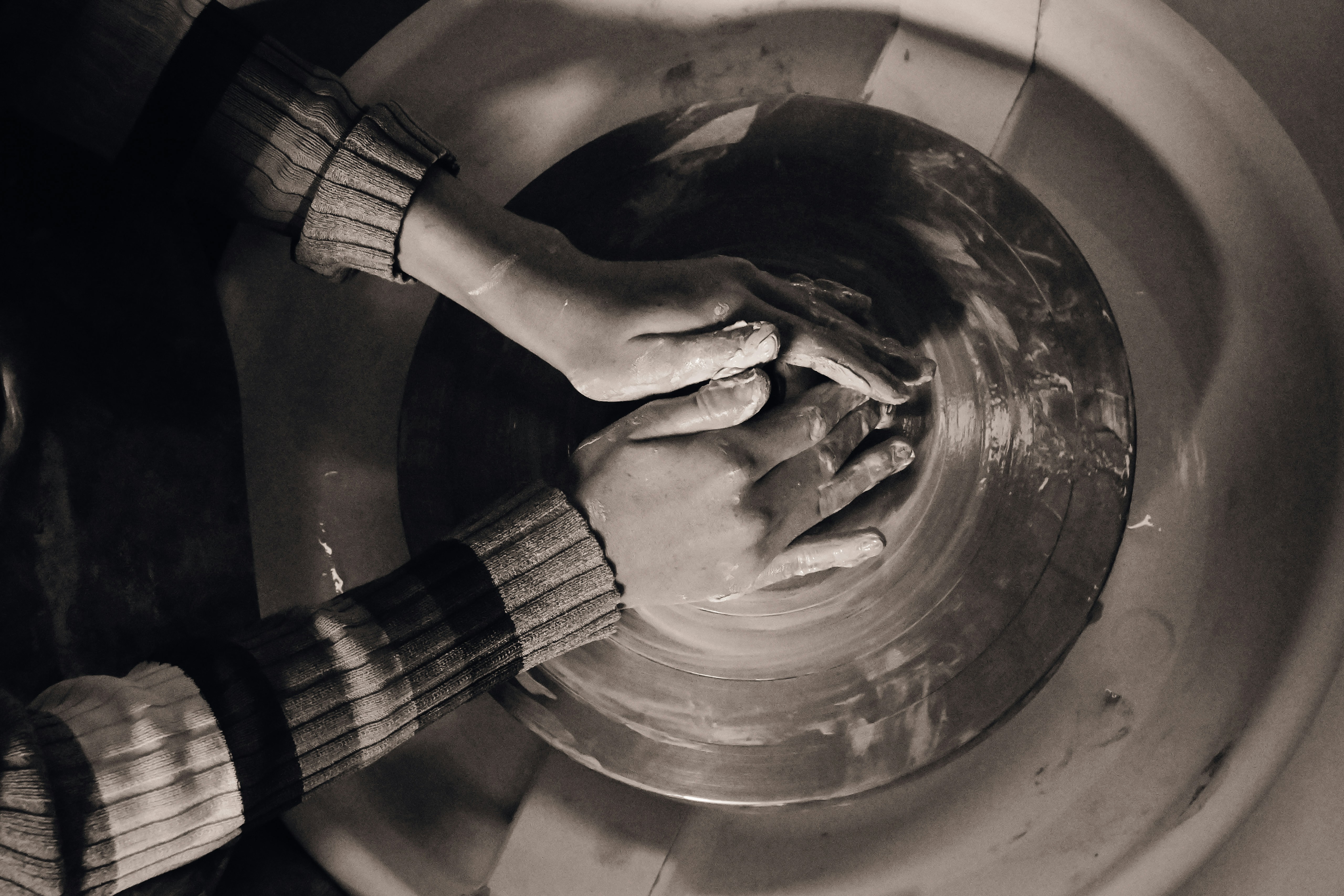
Lesson 4 — The Braced-Hand Centering Method. The technique that produces reliable results for 94% of students within 8 sessions.
Watch the Centering Lesson.Free.
The lesson that most students say changed everything. 18 minutes of close-up instruction on the single technique that solves centering for good.